It's not the Seed Size. It's the setup
It’s finally that time of year when corn seed is starting to roll into the shed. As we begin to organize and sift through bags and boxes, it is important to take a look at what seed sizes were received.
Corn seed can come in a variety of sizes and shapes ranging from large rounds (kernels from the base of the ear), flats (from the center of the ear), and small rounds (from the tip of the ear). Another factor that affects seed size is the environment that it was produced in, specifically during pollination.
Optimal conditions vs. hot and dry or cool and wet can all play into how large the final product is. Some genetics will typically produce large or small seeds which is inherited from the maternal parent.
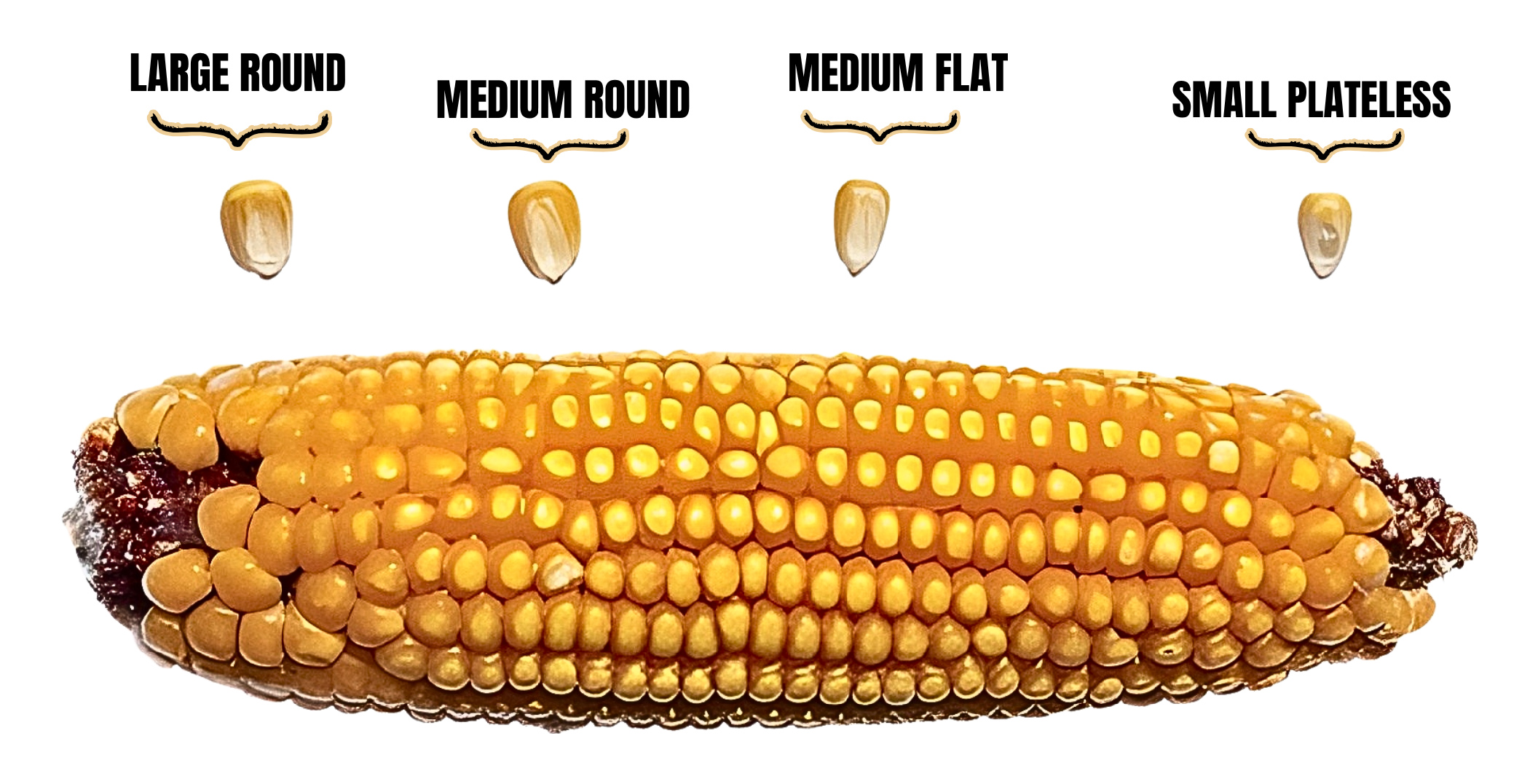
It is important to understand that regardless of kernel size or shape, all seeds have the same genetic material and yield potential. While genetic potential determines corn yield potential, a variety of other management practices and stresses throughout the growing season have a larger impact on yield (Nielsen 1996).
A study conducted by Iowa State University (2005) revealed that post-tasseling, there were no significant differences in growth rate and yield potential based on kernel size. However, the study did highlight several important findings:
- Early growth and emergence can be affected by seed size and shape:
- Smaller seeds that are planted in cooler soils, or crusted soils, may have reduced emergence due to a smaller energy reserve.
- Larger seeds require more moisture than smaller seeds to germinate, thus smaller seeds may provide an advantage in dry
- Obtaining a uniform and optimum plant population is more important than the differences in seed size (emphasizing the importance of optimal planting conditions).
- Subjecting seeds to stress early in development can have detrimental
PRIDE Seeds has four different seed sizes that you may see on the tag: TFL, TFM1, TFM2 and TFM3. These sizes are determined through the TrueFlex grade system which uses seed grade weights to sort into four sizes which help optimize plantability.
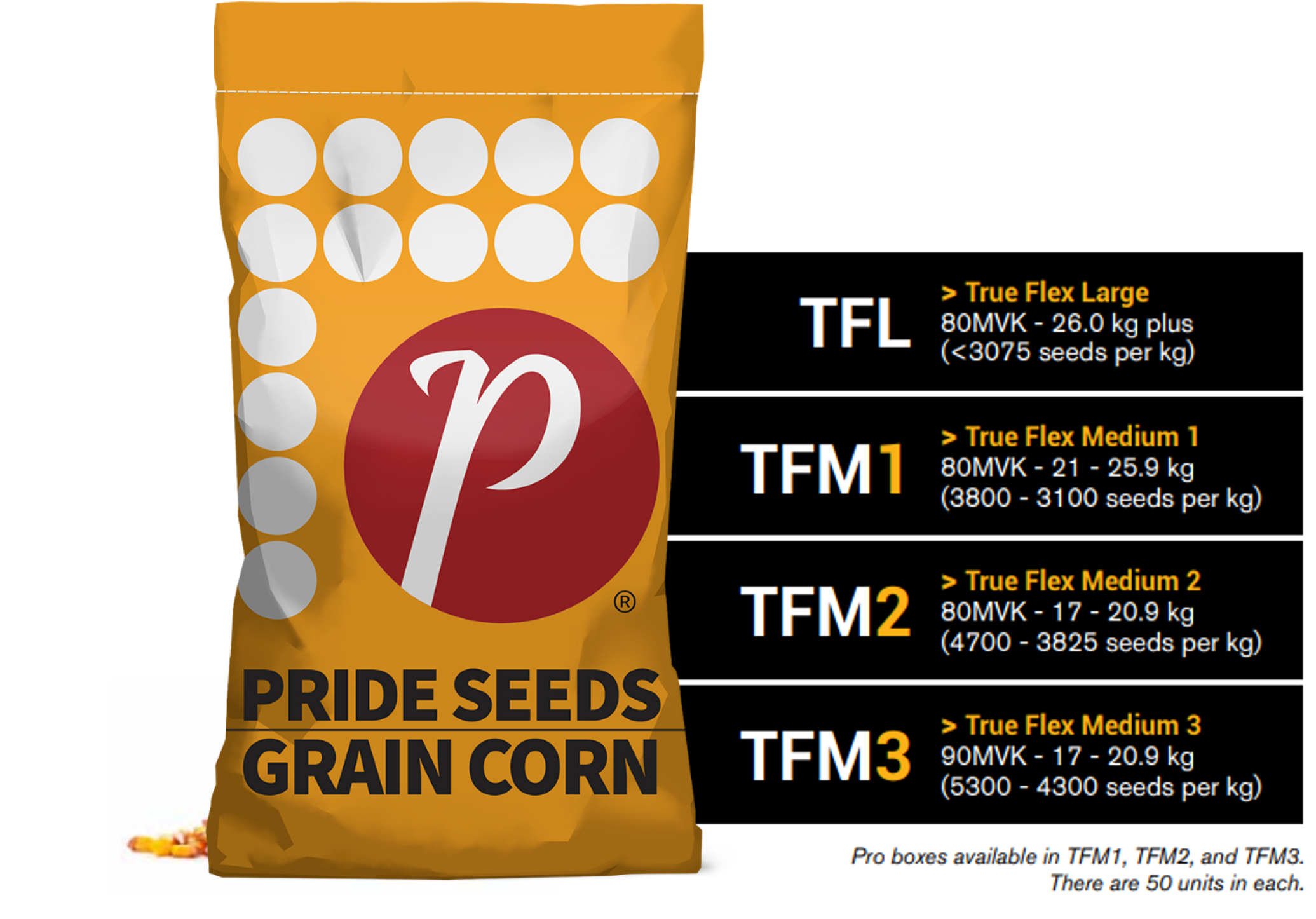
Adjusting your planter is a crucial step in achieving proper planting rates and even emergence, in turn producing that beautiful picket fence stand. Air or vacuum planters are generally easy to adjust – large seed requires more air/ vacuum pressure than small seed. Finger planters tend to be a bit more difficult. PRIDE uses third party testing to verify maximum planter performance and settings. The chart below can be found on every PRIDE Seeds bag.
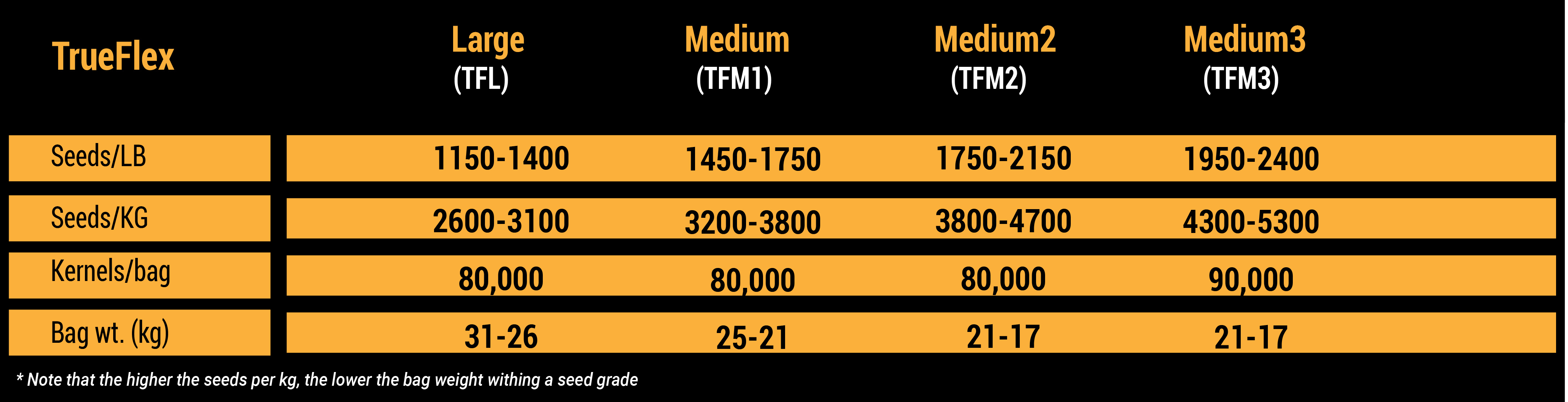
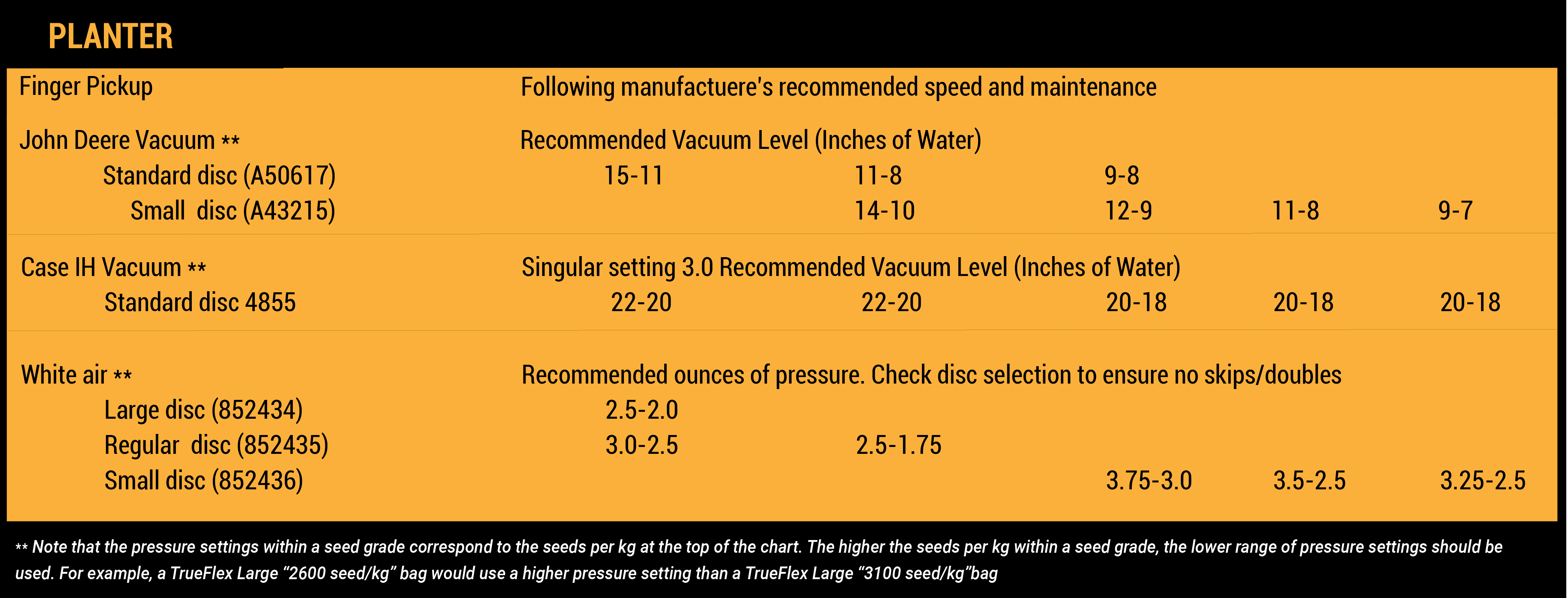
No matter the seed size, rest assured, every lot is thoroughly tested to meet high standards of warm and cold germination, physical purity testing and genetic purity testing before leaving the PRIDE Seeds warehouse. Our focus should be selecting the proper hybrids for each piece of land, making sure conditions are fit for planting and adjusting the planter to meet the seed size received.
https://crops.extension.iastate.edu/encyclopedia/kernel-size-and-shape
https://www.agry.purdue.edu/ext/corn/news/articles.96/p&c9606.htm#:~:text=In%20pract ice%2C%20seed%20size%20and%20shape%20can%20also%20influence%20yield,to%2 010%20bushels